
Have you ever wondered why fish behave differently in warm water compared to cold? The secret lies in how temperature affects their metabolism.
Understanding this connection can help you care better for your aquarium or improve fishing success. You’ll discover how changes in temperature impact fish energy, growth, and activity. Keep reading to unlock the surprising ways your fish’s environment shapes their health and behavior.
Fish Metabolism Basics
Fish metabolism is the process that turns food into energy. This energy helps fish grow, move, and stay healthy.
Temperature affects how fast fish use energy. Warmer water speeds up metabolism, while colder water slows it down.
Metabolic Processes In Fish
Fish metabolism includes breaking down food, breathing, and moving. These processes need energy to work well.
- Digestion: Fish break down food to get nutrients.
- Respiration: Fish use oxygen to release energy from food.
- Movement: Muscles use energy to swim and escape predators.
- Growth: Energy helps build new cells and repair tissues.
Factors Influencing Metabolism
Several things change how fast fish metabolism works. Temperature is one of the most important factors.
| Factor | Effect on Metabolism |
| Water Temperature | Higher temperature increases metabolism |
| Oxygen Levels | More oxygen helps energy production |
| Food Availability | More food raises metabolic rate |
| Fish Size | Smaller fish have faster metabolism |
| Activity Level | Active fish use energy faster |

Credit: www.sciencedirect.com
Temperature And Metabolic Rate
Temperature greatly affects fish metabolism. Fish are cold-blooded animals. Their body temperature matches the water around them.
As water temperature changes, fish metabolic rate changes too. Metabolism controls energy use and biological functions.
Effects Of Temperature Variations
When water temperature rises, fish metabolism speeds up. They need more oxygen and food. Growth and activity increase.
If temperature drops, metabolism slows down. Fish use less energy and move less. This can affect feeding and survival.
- High temperatures increase energy demand
- Low temperatures reduce metabolic rate
- Extreme temperatures can stress fish
- Metabolic changes impact growth and reproduction
Thermal Performance Curves
Thermal performance curves show how metabolism changes with temperature. They have a peak where metabolism is highest.
Beyond this peak, metabolism drops quickly. Too hot or too cold water harms fish health. Each species has its own curve.
| Temperature Range | Metabolic Rate | Fish Activity |
|---|---|---|
| Low | Low | Low activity |
| Optimal | High | High activity |
| High | Declining | Stress and low activity |
Physiological Responses To Temperature
Fish metabolism is influenced by water temperature, which affects their growth, reproduction, and survival. As temperature changes, fish undergo various physiological responses to maintain homeostasis.
Enzyme Activity Changes
Temperature affects the activity of enzymes in fish, which are crucial for various biochemical reactions. As temperature increases, enzyme activity often increases, but above a certain threshold, it can decline.
- Enzymes involved in glycolysis and lipolysis are more active at warmer temperatures.
- Enzymes involved in protein synthesis are more active at cooler temperatures.
Oxygen Consumption Patterns
Temperature affects oxygen consumption in fish, with higher temperatures typically resulting in increased oxygen consumption. However, this increase can lead to reduced oxygen availability in the water, affecting fish health.
| Temperature Range (°C) | Oxygen Consumption Rate |
|---|---|
| 10-15 | Low |
| 15-20 | Moderate |
| 20-25 | High |
Behavioral Adaptations
Fish change their behavior to survive in different temperatures. These changes help them use energy well. They adjust feeding and movement to fit the water temperature.
Understanding these behaviors shows how fish cope with their environment. It also helps us learn about their needs and habits.
Feeding And Activity Shifts
Fish change when and how much they eat based on water temperature. Cold water can slow them down, so they eat less. Warm water speeds them up, increasing their food needs.
- Eat more during warmer times of the day
- Reduce activity and feeding in cold seasons
- Shift to smaller meals if food is scarce
- Hunt actively when metabolism is high
Habitat Selection
Fish move to areas with temperatures that suit their metabolism. They pick spots that keep their body working well. This choice helps them stay healthy and active.
| Temperature Range | Preferred Habitat | Behavior |
| Low (5-15°C) | Deeper waters | Less active, conserve energy |
| Moderate (16-22°C) | Mid-depth zones | Balanced activity and feeding |
| High (23-30°C) | Shallow, warmer areas | More active, increased feeding |
Temperature Stress And Metabolic Limits
Fish metabolism depends on water temperature. Changes in temperature affect their energy use.
Too much heat or cold can stress fish and limit their metabolism. This affects their growth and survival.
Heat Stress Impacts
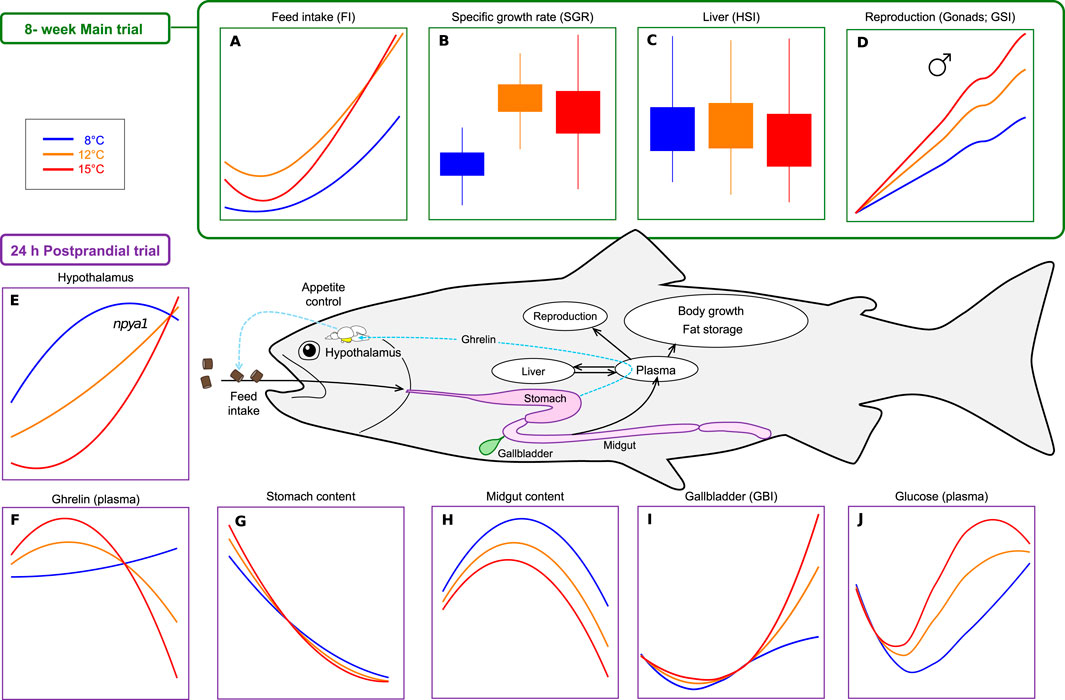
High temperatures raise fish metabolism. Fish need more oxygen but water holds less oxygen when warm.
Heat stress can cause faster breathing, tiredness, and lower immune response. Fish may stop eating.
- Increased oxygen demand
- Reduced oxygen availability
- Higher energy use
- Lower disease resistance
- Decreased feeding and growth
Cold Stress Effects
Cold temperatures slow fish metabolism. Fish use less energy but also move slower and eat less.
Cold stress can reduce fish activity and weaken their immune system. Growth rates drop in cold water.
- Slowed metabolic rate
- Lower feeding activity
- Reduced immune function
- Slower growth
- Increased vulnerability to disease
Credit: www.frontiersin.org
Ecological Consequences
Temperature affects fish metabolism and changes how fish live and grow. These changes impact the whole ecosystem.
Understanding these effects helps us see how fish populations and their environments respond to temperature shifts.
Growth And Reproduction
Warmer water speeds up fish metabolism. This can make fish grow faster but may reduce their size at maturity. Reproduction can also change, with some fish spawning earlier or less often.
- Faster metabolism uses more energy.
- Fish may reach reproductive age sooner.
- Smaller adult size can lower egg production.
- Temperature changes can shift spawning seasons.
Population Dynamics
Changes in growth and reproduction affect fish numbers and community balance. Some species may decline, while others grow too fast, disrupting ecosystems.
| Factor | Effect on Fish Population |
| Increased Temperature | Higher metabolism, faster growth, smaller adults |
| Altered Spawning Time | Mismatch with food availability |
| Reduced Oxygen Levels | Stress, lower survival rates |
| Predator-Prey Balance | Shifts in species dominance |
Implications For Aquaculture
Temperature strongly affects fish metabolism. It changes how fish grow and use energy.
Understanding this helps farmers keep fish healthy. It also improves fish production in farms.
Optimizing Rearing Conditions
Fish grow best at certain temperatures. Too hot or cold water slows their metabolism.
- Keep water temperature stable within optimal range
- Match species with suitable temperature zones
- Use aeration to improve oxygen levels at higher temperatures
- Feed fish according to metabolic needs at different temperatures
Managing Temperature Fluctuations
Sudden temperature changes stress fish. This lowers their immunity and growth.
| Temperature Fluctuation | Effect on Fish | Management Strategy |
| Rapid increase | Increased metabolism, low oxygen | Use shading and aerators |
| Rapid decrease | Slowed metabolism, stress | Insulate tanks or ponds |
| Daily cycles | Metabolic stress | Monitor and regulate water temperature |

Credit: onlinelibrary.wiley.com
Future Research Directions
Understanding the effects of temperature on fish metabolism is crucial for maintaining healthy aquatic ecosystems. Research in this area can help scientists and policymakers develop effective strategies for mitigating the impacts of climate change on fish populations.
Climate Change Effects
Climate change is altering the temperature and pH of aquatic ecosystems, affecting fish metabolism and behavior. Rising water temperatures can increase fish metabolic rates, leading to changes in feeding patterns, growth rates, and reproduction.
- Rising water temperatures can lead to increased fish mortality
- Changes in fish metabolism can disrupt food webs and ecosystem balance
- Climate change can alter the distribution and abundance of fish species
Innovative Monitoring Techniques
Developing innovative monitoring techniques is essential for understanding the effects of temperature on fish metabolism. New technologies, such as acoustic sensors and satellite imaging, can provide real-time data on water temperature and fish behavior.
- Acoustic sensors to track fish movements and behavior
- Satellite imaging to monitor water temperature and ocean currents
- Environmental DNA (eDNA) sampling to detect fish species and monitor population dynamics
Frequently Asked Questions
How Does Temperature Affect Fish Metabolism Rate?
Temperature directly influences fish metabolism by speeding it up in warmer water and slowing it down in colder water. Fish use more energy as temperature rises, increasing oxygen consumption and food intake. Cooler temperatures reduce metabolic rates, leading to slower growth and reduced activity.
What Is The Optimal Temperature For Fish Metabolism?
The optimal temperature varies by species but generally ranges between 20°C and 30°C. Within this range, fish metabolism functions efficiently, supporting growth, reproduction, and activity. Temperatures outside this range can cause stress and metabolic imbalance, affecting fish health and survival.
Why Do Fish Eat More In Warmer Temperatures?
Warmer temperatures increase fish metabolic rates, causing higher energy demands. As metabolism speeds up, fish need more food to meet energy requirements. This leads to increased feeding activity and faster digestion, supporting growth and overall vitality during warmer periods.
Can Temperature Changes Harm Fish Metabolism?
Yes, sudden or extreme temperature shifts can disrupt fish metabolism. Rapid changes cause stress, reduce immune function, and impair growth. Prolonged exposure to unsuitable temperatures may lead to metabolic failure, disease, or death. Stable temperature is essential for healthy fish metabolism.
Conclusion
Fish metabolism changes with water temperature. Warmer water speeds up their energy use. Colder water slows down their body processes. These changes affect how fish grow and eat. Understanding this helps fish farmers and anglers. It also supports fish health in the wild.
Temperature shifts can stress fish, so balance is key. Watching water temperature helps protect fish life. Keep these facts in mind for healthier fish environments.