
Are you ready to transform your aquarium into a vibrant underwater paradise? The right LED lighting setup can make all the difference in how your fish and plants look—and even how healthy they stay.
But with so many options and technical details, it’s easy to feel overwhelmed. This guide will walk you through everything you need to know, step by step. By the end, you’ll have the confidence to create a stunning, energy-efficient lighting system that brings your aquarium to life.
Keep reading, and discover how simple it can be to brighten up your underwater world.

Credit: www.vevor.ca
Choosing The Right Led Lights
Setting up LED lights for your aquarium is important for plant growth and fish health. Picking the right lights helps create a natural and attractive environment.
LED lights come in many types and colors. You must understand brightness, color, and style to find the best fit.
Types Of Led Lights
There are several LED light types for aquariums. Each type serves a different purpose and suits different tank setups.
- Standard White LEDs: Good for general lighting and small tanks.
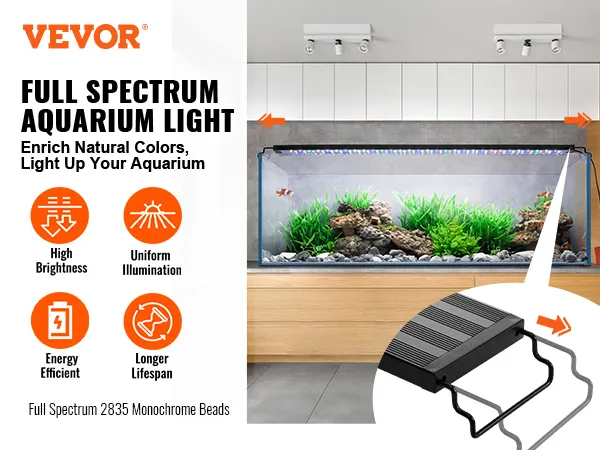
- Full Spectrum LEDs: Provide light similar to natural sunlight.
- RGB LEDs: Allow you to adjust colors for decorative effects.
- Specialized Plant LEDs: Focus on wavelengths that help plants grow.
Brightness And Intensity
Brightness affects how well plants and fish see and grow. It is measured in lumens or PAR values.
| Brightness Level | Best For |
| Low (under 20 lumens per liter) | Fish-only tanks or low-light plants |
| Medium (20-40 lumens per liter) | Mixed tanks with some plants |
| High (above 40 lumens per liter) | Heavily planted tanks and coral |
Color Temperature Options
Color temperature changes how light looks in your aquarium. It is measured in Kelvins (K).
- 5000K to 6500K: Mimics daylight, good for most freshwater tanks.
- 7000K to 10000K: Gives a blue tint, ideal for saltwater tanks.
- Below 5000K: Warmer light, can enhance reds and oranges in fish.
Credit: www.vevor.ca
Lighting Needs For Different Aquariums
Lighting plays a key role in keeping aquarium life healthy. Different types of aquariums need different lighting setups. Proper light helps fish, plants, and corals grow well.
This guide explains the lighting needs for freshwater tanks, saltwater tanks, and planted aquariums. Learn how to choose the right light for each type.
Freshwater Tanks
Freshwater tanks usually need moderate lighting. Fish in these tanks do not require very bright lights. The light should mimic natural daylight to reduce stress.
- Use LED lights with a color temperature between 5000K and 7000K.
- Keep lighting on for 8 to 12 hours daily.
- Choose lights with low to medium intensity.
- Avoid lights that cause too much heat.
Saltwater Tanks
Saltwater tanks, especially reef tanks, need strong lighting. Corals and some saltwater fish depend on bright light for health. Lighting must support photosynthesis in corals.
| Light Type | Purpose | Recommended Duration |
| Metal Halide | High intensity for corals | 10-12 hours |
| LED | Energy efficient and customizable | 8-12 hours |
| T5 Fluorescent | Good spectrum for coral growth | 8-10 hours |
Planted Aquariums
Planted aquariums need bright and full-spectrum lighting. Plants require light to grow leaves and roots. The light should promote photosynthesis and vibrant plant colors.
- Use LED or fluorescent lights designed for plant growth.
- Choose lights with a color temperature of 6500K to 7000K.
- Provide 10 to 12 hours of light per day.
- Adjust intensity based on plant types and tank size.
Setting Up Your Led Lighting System
Setting up the right LED lighting is important for your aquarium’s health. Good lighting helps plants grow and shows your fish’s true colors.
This guide explains how to mount, wire, and automate your LED lights for the best results.
Mounting And Positioning
Place your LED lights above the aquarium to cover the whole tank. Make sure the light spreads evenly to avoid dark spots.
Keep the lights at a safe height to prevent water damage. Use brackets or hanging kits for secure mounting.
- Center lights over the aquarium
- Keep at least 6 inches above the water surface
- Use adjustable mounts for flexibility
- Avoid direct contact with water
Wiring And Power Supply
Connect your LED lights to a safe power source using proper cables. Use waterproof connectors if needed.
Check the power supply matches your LED’s voltage and wattage. Use surge protectors to prevent damage.
- Use cables rated for aquarium use
- Keep wires away from water
- Match power supply to LED specs
- Include a surge protector for safety
Timers And Automation
Use timers to control when your LED lights turn on and off. This keeps a regular day and night cycle for your aquarium.
Automation helps maintain consistent lighting without manual work. You can set different light levels for morning and evening.
- Set timers for 8 to 12 hours of light daily
- Use smart timers for multiple settings
- Adjust light intensity based on tank needs
- Automate gradual light changes to mimic sunrise and sunset

Credit: www.aqqapet.com
Enhancing Tank Vibrancy
Setting up the right aquarium LED lighting can make your tank look lively and bright. Good lighting helps your fish and plants show their true colors.
This guide covers how to pick the right light spectrum, control light duration, and keep algae growth under control.
Choosing The Right Light Spectrum
The color of light affects how your tank looks and how plants grow. Different colors highlight different features in your aquarium.
- Blue light helps create a calm, deep-water effect.
- Red light brings out the reds in fish and plants.
- White light provides a natural look and helps plant growth.
- Green light can enhance plant vibrancy but use it sparingly.
Balancing Light Duration
Too much light can harm your tank, while too little can stunt plant growth. Set a daily light schedule that matches your tank’s needs.
| Light Duration | Effect |
| 6 hours | May limit plant growth |
| 8-10 hours | Ideal for most planted tanks |
| 12+ hours | Risk of algae growth |
Avoiding Algae Growth
Algae can make your tank look dirty and harm plants. Control light and nutrients to keep algae low.
- Limit light to 8-10 hours daily.
- Do not overfeed fish; leftover food feeds algae.
- Use live plants to compete with algae for nutrients.
- Regularly clean tank surfaces and decorations.
Maintaining Your Led Lighting
Proper care keeps your aquarium LED lighting working well. Clean and check the lights often for best results.
Good maintenance helps your fish and plants stay healthy with the right light levels.
Cleaning And Care
Dust and water spots can reduce LED brightness. Clean lights gently using a soft cloth. Avoid harsh chemicals that may damage the surface.
- Turn off and unplug the LED light before cleaning.
- Use a damp, soft cloth to wipe the light cover.
- Remove any salt buildup from the aquarium environment.
- Clean the light fixture every two weeks for best results.
Replacing Leds
LEDs can burn out over time. Replace faulty LEDs to keep the light bright and even. Use the same type and color of LED for best effect.
| Issue | Cause | Solution |
| Dim or flickering light | Burned out LED | Replace the LED module |
| Uneven lighting | Some LEDs not working | Check and replace bad LEDs |
| Light does not turn on | Power supply or wiring issue | Inspect wiring and power source |
Troubleshooting Common Issues
If your LED lights show problems, check simple fixes first. Make sure power is connected and switches are on.
- Check if the light is plugged in properly.
- Inspect all cables for damage.
- Test the power outlet with another device.
- Look for signs of corrosion or water damage.
- Reset any timers or controllers used with the LEDs.
Frequently Asked Questions
What Is The Best Led Lighting For Aquariums?
The best LED lighting provides full-spectrum light for plant growth and fish health. Choose adjustable intensity and color options for customization.
How Do I Install Led Lights In My Aquarium?
Mount LED fixtures above the tank using brackets or magnetic mounts. Ensure lights cover the entire tank evenly for optimal effect.
How Many Hours Should Aquarium Led Lights Run Daily?
Run LED lights 8-10 hours daily to mimic natural daylight. Use timers for consistent lighting and to prevent algae growth.
Can Led Lights Promote Algae Growth In Aquariums?
Yes, excessive or prolonged LED lighting can encourage algae growth. Control light intensity and duration to minimize algae problems effectively.
Conclusion
Choosing the right LED lights helps your aquarium thrive. Good lighting supports plant growth and fish health. Keep the setup simple and adjust brightness as needed. Regular checks ensure lights work well and last long. Enjoy the beauty of your well-lit aquarium every day.
Lighting makes your underwater world shine bright and clear.