
Is your heater not working when you need it most? Feeling the chill creep in can be frustrating and uncomfortable.
But before you call a repair person or buy a new unit, there are simple steps you can take to troubleshoot the problem yourself. In this guide, you’ll discover easy ways to identify why your heater isn’t heating up and how to fix it quickly.
Don’t let the cold win—keep reading to get your heater back to work and your home warm again.
Common Heater Issues
Heaters sometimes stop working or do not work well. Knowing common problems helps you fix them faster.
This guide covers four common heater problems and what may cause them.
No Power Or Response
Your heater may not turn on or show any signs of power. This can happen if there is no electricity or a safety switch is off.
Check if the heater is plugged in and the outlet works. Also, look for blown fuses or tripped breakers.
- Power cord is unplugged or damaged
- Tripped circuit breaker or blown fuse
- Faulty power switch or thermostat
- Internal wiring issues
Insufficient Heat Output
If your heater runs but does not warm the room well, it may have a problem. Dirt or blockages can reduce heat output.
Check and clean filters or vents. Also, the heater may be too small for the room size.
- Dirty or clogged air filters
- Blocked or closed vents
- Incorrect thermostat settings
- Heater size too small for space
Unusual Noises
Strange sounds like banging, rattling, or squealing can mean a problem. Loose parts or worn components often cause these noises.
Inspect the heater for loose screws or dirty fans. Regular maintenance can prevent noise issues.
- Loose screws or panels
- Worn or dirty fan motor
- Debris inside the heater
- Expansion or contraction of metal parts
Frequent Cycling On And Off
Heaters turning on and off often is called short cycling. It can waste energy and damage the heater.
Short cycling can happen from thermostat issues or overheating. Check the thermostat and clean any dust inside.
- Faulty thermostat sensor
- Dirty or blocked air filters
- Overheating due to poor airflow
- Incorrect heater size for room
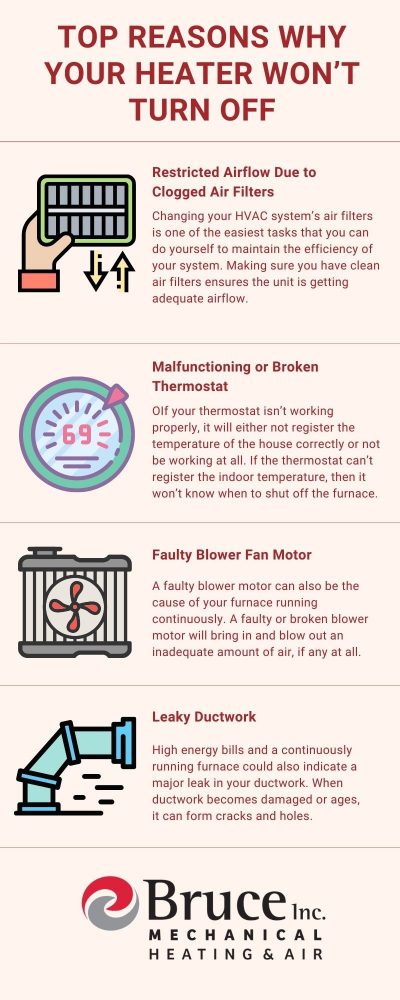
Credit: bruceinc.com
Basic Checks Before Repair
If your heater is not working, try some basic checks first. These steps can help you identify simple issues before calling for repairs.
Sometimes, a quick check can save you time and money. Let’s explore the basic checks.
Verify Power Supply
Ensure your heater is connected to a power source. Check the power cord and plug for any damage.
Look at your circuit breaker. Make sure it has not tripped.
- Check if the power switch is on
- Inspect the power cord for frays
- Reset the circuit breaker if needed
Inspect Thermostat Settings
Check that your thermostat is set to the correct mode. It should be set to “heat” and not “cool”.
Adjust the temperature setting. It should be higher than the current room temperature.
- Set thermostat to “heat” mode
- Increase the temperature setting
- Replace the batteries if needed
Check Air Filters
Dirty air filters can block airflow. Check your heater’s filter for dust and debris.
Replace or clean the filters if they appear clogged. This can improve heater performance.
- Remove the air filter from the heater
- Inspect for dust buildup
- Replace or clean the filter
Examine Vents And Ducts
Blocked vents can prevent warm air from circulating. Check that all vents are open and clear.
Look for any obstructions in the ducts. They should be free of blockages for proper airflow.
- Ensure all vents are open
- Clear any furniture blocking the vents
- Inspect ducts for obstructions
Quick Fixes For Electric Heaters
Electric heaters can stop working for simple reasons. You can fix many problems yourself without calling a technician.
Check these quick fixes before deciding on expensive repairs. They often save time and money.
Reset The Heater
Sometimes heaters stop working because of a safety shutdown. Resetting the heater can fix this.
- Turn off the heater and unplug it from the power source.
- Wait for about five minutes to let it cool down.
- Press the reset button if your heater has one. It is usually red or black.
- Plug the heater back in and turn it on.
- Check if the heater starts working again.
Replace Blown Fuses
A blown fuse can stop the heater from getting power. Replacing it might solve the issue.
| Fuse Type | How to Check | Replacement Tip |
| Glass Fuse | Look for a broken wire inside the fuse tube. | Use the exact same size and rating fuse. |
| Ceramic Fuse | Check for burn marks or cracks on the fuse body. | Buy a fuse with the same voltage and amperage. |
| Resettable Fuse | Press the button to reset it. | If it does not reset, replace the fuse. |
Clean Heating Elements
Dust and dirt on heating elements reduce heat output. Cleaning them helps the heater work better.
- Turn off and unplug the heater before cleaning.
- Use a soft brush or cloth to remove dust from the heating elements.
- Do not use water or liquid cleaners on the heating parts.
- Check the air vents and clean them to improve air flow.
- After cleaning, plug in and test the heater.
Troubleshooting Gas Heaters
Gas heaters keep homes warm during cold days. Sometimes, they stop working and need fixing.
Understanding basic checks can help you solve common heater problems safely and quickly.
Check Pilot Light
The pilot light is a small flame that starts the heater. If it goes out, the heater will not work.
Look for a lit pilot light through the heater window. If it is off, try relighting it carefully.
- Turn the gas knob to “off” and wait 5 minutes.
- Turn the knob to “pilot” and press the button.
- Use a match or lighter to light the pilot flame.
- Hold the button for 30 seconds, then release.
- If the flame stays on, turn the knob to “on.”
Inspect Gas Supply
Your heater needs gas to run. Check if the gas supply is on and working.
Look at the gas valve near the heater. Make sure it is open and not blocked.
- Check the main gas line for leaks or damage.
- Listen for unusual sounds near the gas valve.
- Smell for gas odors around the heater.
- If you smell gas, turn off the supply and call a professional.
Clean Burner And Flame Sensor
Dirt on the burner or flame sensor can stop the heater from working properly.
Turn off the heater and let it cool before cleaning these parts.
- Remove dust and debris from the burner with a soft brush.
- Use a clean cloth to wipe the flame sensor gently.
- Check for rust or damage and replace parts if needed.
- After cleaning, test the heater to see if it works better.
When To Call A Professional
A heater can stop working for many reasons. Some problems are easy to fix. Others need expert help. Knowing when to call a professional can keep you safe and warm.
This guide explains key signs that show you should get a pro to check your heater. It covers persistent problems, gas leaks, and electrical issues.
Persistent Issues After Fixes
If your heater still does not work after simple fixes, call a professional. They can find hidden problems and fix them safely.
- The heater turns off quickly after starting.
- Strange noises keep coming from the unit.
- The heater blows cold air instead of warm.
- Repeated repairs do not solve the problem.
Gas Leak Or Smell Detection
Smelling gas near your heater is dangerous. It means a gas leak might be present. Do not try to fix it yourself. Leave the house and call an expert right away.
| Warning Sign | Action to Take |
| Strong gas smell | Evacuate and call emergency services |
| Hissing sound near heater | Turn off gas supply and get professional help |
| Dizziness or headache near heater | Seek fresh air and call a technician |
Electrical Concerns
Heaters use electricity and can cause shocks or fires if faulty. Call a professional if you notice any electrical problems.
- Heater trips circuit breakers often
- Burning smell near the heater
- Sparks or smoke from the unit
- Heater won’t turn on despite power supply

Credit: www.callacs.com
Preventive Maintenance Tips
Keeping your heater working well needs regular care. Small checks can stop big problems.
Use these tips to keep your heater safe and warm all year.
Regular Cleaning Schedule
Dirt and dust can stop your heater from working well. Clean it often to keep air flowing.
- Turn off the heater before cleaning
- Remove dust from vents and filters
- Use a soft brush or vacuum
- Wipe outside with a damp cloth
Seasonal Inspections
Check your heater at the start of each season. Look for leaks, strange sounds, or smells.
| Inspection Item | What to Check |
|---|---|
| Thermostat | Make sure it controls temperature correctly |
| Burners | Look for dirt or damage |
| Flue Pipe | Check for blockages or rust |
| Electrical Connections | Ensure wires are tight and not frayed |
Replacing Parts On Time
Parts wear out with use. Replace them before they cause a breakdown.
- Change air filters every 3 months
- Replace worn belts or motors as needed
- Check and replace batteries in remote controls
- Schedule professional part checks yearly

Credit: www.youtube.com
Frequently Asked Questions
Why Is My Heater Not Turning On?
Your heater may not turn on due to power issues, tripped breakers, or faulty thermostats. Check the power supply and reset breakers. Ensure the thermostat is set correctly. If problems persist, inspect wiring or call a technician for safe repairs.
How Can I Fix A Heater Blowing Cold Air?
A heater blowing cold air often means a dirty filter, low gas, or pilot light issues. Replace the filter and check the gas supply. Relight the pilot if needed. Regular maintenance prevents these common problems and keeps your heater functioning efficiently.
What Causes A Heater To Shut Off Randomly?
Random heater shut-offs often result from overheating, clogged filters, or sensor malfunctions. Clean or replace filters and check for airflow obstructions. Overheating triggers safety switches to stop the heater. If it continues, contact a professional to diagnose the issue.
How Do I Reset My Heater Thermostat?
To reset your heater thermostat, turn it off and unplug the unit if possible. Wait for a few minutes, then turn it back on. Resetting clears minor errors and restarts the system. Refer to your manual for model-specific reset instructions.
Conclusion
Troubleshooting a heater can save time and money. Start by checking power and settings. Clean or replace filters regularly. Look for simple fixes before calling a professional. Small problems often cause big issues. Stay safe and follow instructions carefully. Regular care keeps your heater working well.
Cold days will feel much better. Keep this guide handy for quick help. Don’t ignore warning signs or unusual noises. A warm home is just a few steps away.