
Have you ever watched your guppy fish and wondered why some males seem to act bolder or more aggressive than others? Understanding guppy male dominance behavior can change the way you care for your aquarium.
This behavior affects how your fish interact, breed, and even how healthy they stay. If you want to create a balanced and peaceful tank, learning the secrets behind this natural behavior is key. Keep reading, and you’ll discover simple yet powerful insights that will help you recognize and manage dominance in your guppy males like a pro.

Credit: michael-langerman.medium.com
Male Guppy Behavior
Male guppies show many interesting behaviors. These behaviors help them find mates and protect their space.
Understanding male guppy actions can help fish keepers create better environments for them.
Typical Actions And Movements
Male guppies swim actively and often show quick darting movements. They chase females to get their attention.
- Flaring fins to appear larger
- Chasing or following females closely
- Displaying sudden bursts of speed
- Circling other males to show dominance
- Performing a “sigmoid” or S-shaped body curve during courtship
Coloration And Display
Male guppies have bright colors to attract females. They show spots and patterns that can change with mood.
| Color Feature | Purpose |
| Bright orange spots | Attract female attention |
| Blue and green iridescence | Signal health and vitality |
| Fin flare | Show size and strength |
| Dark edges on fins | Enhance visual contrast |
Territorial Claims
Male guppies mark and defend small areas. They use displays and chasing to keep rivals away.
Common signs of territorial behavior include:
- Chasing other males out of a chosen spot
- Flaring fins to look bigger
- Patrolling the area regularly
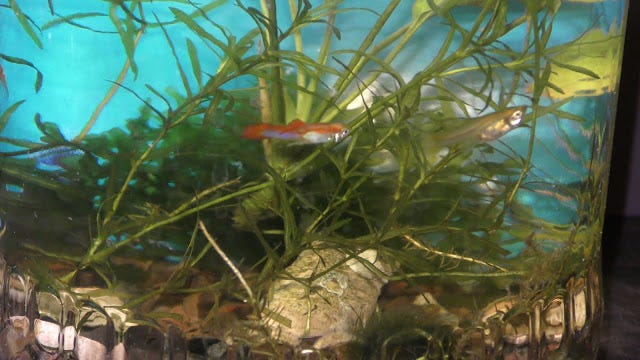
- Using plants or decorations as boundaries
Credit: michael-langerman.medium.com
Establishing Dominance
Male guppies show strong behavior to establish dominance. This helps them control territory and mating opportunities.
Dominance is important for survival and passing on genes. It involves fights, displays, and social ranking.
Aggression And Challenges
Male guppies use aggression to challenge rivals. They chase, nip, and flare fins to appear bigger and stronger.
- Chasing weaker males away
- Displaying bright colors to intimidate
- Engaging in quick darting movements
- Nibbling fins to show power
Courtship And Mating Rights
Dominant males get more chances to mate. They perform courtship dances to attract females and show their strength.
| Behavior | Purpose |
| Sigmoid display | Show body colors and size |
| Following females | Gain attention and interest |
| Leaping and quick movements | Demonstrate agility and health |
Hierarchy Formation
Male guppies form social ranks to reduce fights. Higher ranks get better food and mates.
- Dominant males have brighter colors.
- Subordinate males avoid conflict.
- Ranks change after fights or challenges.
- Higher rank means more mating success.
Social Hierarchy Effects
Male guppies show clear social hierarchy in their groups. Dominant males often control the behavior of other males.
This hierarchy affects many things like mating, access to resources, and health. Understanding these effects helps us know guppy behavior better.
Impact On Mating Success
Dominant males usually get more chances to mate. They display brighter colors and bigger fins to attract females.
Subordinate males have fewer opportunities and often stay hidden. Females tend to choose dominant males for better genes.
- Dominant males attract more females
- Subordinate males mate less often
- Brighter colors signal higher status
- Females prefer dominant males
Resource Access And Control
Dominant males control the best feeding spots and safe areas. This control helps them stay healthy and strong.
Subordinate males often get less food and shelter. This makes it hard for them to compete and survive.
- Dominant males get priority to food
- Safe spaces are held by dominant males
- Subordinate males have limited resources
- Resource control affects survival chances
Stress And Health Implications
Lower-ranked males face more stress due to fighting and lack of resources. This stress can weaken their immune system.
Dominant males may also face stress from constant challenges. But overall, they stay healthier than subordinates.
- Subordinate males show higher stress levels
- Stress can reduce immunity and health
- Dominant males have better health
- Fighting causes stress in all males
Environmental Influences
Guppy male dominance behavior changes depending on their environment. Various factors affect how males compete and interact.
Understanding these environmental influences helps explain why guppies behave differently in the wild.
Population Density
High population density leads to more competition among male guppies. Males must work harder to show dominance and attract females.
- More males increase fights and displays.
- Dominant males control the best spots.
- Lower density reduces competition pressure.
Habitat Complexity
Complex habitats with plants and hiding places affect male dominance. Males use cover to avoid fights or sneak closer to females.
| Habitat Type | Effect on Male Dominance |
|---|---|
| Simple (open water) | More visible fights and displays |
| Complex (plants, rocks) | More hiding, less direct fights |
Predator Presence
Predators change how males behave. Guppies reduce bold displays to stay safe when predators are near.
- Males show less aggression to avoid attention.
- Dominant males may hide more often.
- Risk of predation lowers competition intensity.
Behavioral Adaptations
Male guppies show many ways to act in their groups. These actions help them stay safe and find mates. They change their behavior based on who is around them.
Understanding these changes helps us learn how guppies live and compete. Their behavior is a mix of fighting and working together.
Shifts In Dominance Strategies
Guppy males change how they act to keep or gain power. They may be bold or shy depending on the situation. These shifts help them avoid fights or win important battles.
- Use displays of color to show strength
- Switch between aggressive and passive moves
- Hide or flee if the opponent is too strong
- Try sneaky moves to mate without fighting
Response To Rival Males
When a rival male appears, guppies act fast. They assess the rival’s size and strength. This helps them decide to fight or back down.
| Behavior | Purpose |
| Flashing colors | Show dominance |
| Chasing | Push rival away |
| Hiding | Avoid injury |
| Quick attacks | Win control quickly |
Cooperation And Conflict
Guppy males sometimes work with each other to keep peace. They also have fights to settle who leads. This mix of cooperation and conflict shapes their groups.
Common ways guppies cooperate or conflict:
- Sharing safe spots to hide
- Forming small groups to watch for predators
- Competing for mates with displays
- Using threats to avoid real fights
Research Methods
Studying guppy male dominance behavior requires careful research. Scientists use different methods to understand how guppies act.
Researchers focus on observation techniques, experimental setups, and data analysis approaches. These methods help in understanding the behavior of guppies.
Observation Techniques
Observation is key in studying guppies. Researchers watch how guppies interact in their environment.
They note behaviors like chasing and displays of color. Observing these actions helps in understanding dominance.
- Use of video recordings for detailed analysis
- Live observations in controlled tanks
- Documenting frequency of aggressive interactions
Experimental Setups
Experiments help test ideas about guppy behavior. Setups often include tanks that mimic natural habitats.
Researchers control conditions like light and water quality. This helps to see how changes affect guppy interactions.
| Condition | Purpose |
| Light levels | Observe changes in behavior |
| Water quality | Ensure health and activity |
| Tank size | Allow natural movement |
Data Analysis Approaches
Data analysis is crucial in understanding guppy behavior. Scientists use statistics to find patterns.
They compare different groups of guppies. This helps in identifying dominant behaviors and their triggers.
- Statistical software for analyzing data
- Comparison of aggressive behaviors
- Frequency analysis of interactions
Implications For Aquarists
Guppy male dominance behavior can impact the social dynamics of an aquarium. Aquarists should understand these behaviors to maintain harmony.
Male guppies often display aggression to establish dominance. This can lead to stress in the tank if not managed properly.
Managing Male Aggression
Aggressive males may chase or nip others. This can harm both dominant and weaker fish, leading to health issues.
To manage aggression, aquarists can provide more hiding spots. This gives weaker fish places to retreat.
- Add more plants and decorations
- Ensure adequate space for swimming
- Observe fish interactions regularly
Promoting Healthy Social Structures
Balanced social structures reduce stress for all fish. A good male-to-female ratio helps in achieving this balance.
Having more females than males can minimize aggression. This also allows males to display courtship behavior naturally.
- Maintain a ratio of one male to two or three females
- Monitor fish behavior and make adjustments as needed
Breeding Considerations
For breeding, understanding dominance is key. Dominant males often get the most breeding opportunities.
Separate overly aggressive males if they disrupt breeding. This ensures all healthy males have a chance to mate.
- Use breeding tanks to control interactions
- Rotate males to give each a chance to breed

Credit: jungleaquatics.com
Frequently Asked Questions
What Triggers Male Dominance In Guppy Behavior?
Male guppy dominance is triggered by competition for mates and territory. Dominant males display brighter colors and aggressive postures to assert control and attract females.
How Do Male Guppies Show Dominance?
Male guppies show dominance through chasing, nipping, and displaying vibrant colors. These behaviors help establish hierarchy and reduce conflicts among males.
Does Male Dominance Affect Guppy Mating Success?
Yes, dominant male guppies have higher mating success. Their bright colors and confidence attract more females, increasing their chances to reproduce.
Can Multiple Dominant Male Guppies Coexist?
Multiple dominant males can coexist but often have clear hierarchical ranks. Subordinate males avoid direct conflicts to maintain social balance.
Conclusion
Guppy male dominance shapes how these fish behave daily. Dominant males control space and attract females more often. This behavior helps them pass on their genes. Understanding this can improve your aquarium care. Watch how males interact to keep peace in the tank.
Healthy dominance means less fighting and stress among fish. Each guppy has its place in the social order. Observing these patterns brings fun and learning together. Keep your guppies happy by respecting their natural habits.