
Are you struggling to keep your guppies healthy and vibrant? One of the biggest hidden threats to your aquarium might be nitrate buildup.
High nitrate levels can stress your fish, stunt their growth, and even lead to disease. But don’t worry—controlling nitrate doesn’t have to be complicated. You’ll discover simple, effective tips to manage nitrate levels and create a safe, thriving environment for your guppies.
Keep reading to learn how small changes can make a big difference in your tank’s health.

Credit: jungleaquatics.com
Causes Of High Nitrate Levels
High nitrate levels can harm your guppy fish. Understanding what causes this helps keep water safe. Nitrates come from several common aquarium problems.
Watch for signs of these issues to control nitrate build-up. Proper care keeps your tank healthy and your fish happy.
Overfeeding Issues
Feeding guppies too much food leads to excess waste. Leftover food breaks down and raises nitrate levels. Avoid overfeeding to reduce this risk.
- Feed small amounts once or twice daily
- Remove uneaten food after a few minutes
- Use high-quality fish food for better digestion
- Observe fish eating habits to adjust feeding
Inadequate Filtration
Filters clean the water by removing waste and toxins. Poor or small filters cannot keep nitrate levels low. Regular cleaning and proper filter size are key.
| Filter Type | Recommended Tank Size |
| Hang-On-Back | Up to 20 gallons |
| Canister Filter | 20 to 50 gallons |
| Sponge Filter | Small tanks under 10 gallons |
Decaying Organic Matter
Dead plants, fish waste, and uneaten food create decaying matter. This matter releases nitrates into the water. Remove decay quickly to keep levels down.
- Remove dead leaves and plants daily
- Clean substrate with a gravel vacuum weekly
- Perform regular partial water changes
- Check for dead fish and remove immediately
Regular Water Testing
Keeping guppy tanks healthy means checking the water often. One key test is nitrate levels. Nitrates come from fish waste and food leftovers. Too much nitrate harms guppies and plants.
Regular water testing helps spot high nitrate early. This way, you can fix problems before fish get sick. Testing is simple and quick with the right tools.
Choosing The Right Test Kit
Select a test kit made for nitrate testing in aquariums. Look for kits that are easy to use and give clear results. Liquid kits and test strips are common choices.
Some kits measure nitrates with colors. Match the color on the chart to your water sample. Pick kits with good reviews for accuracy. Avoid kits that are hard to read or take long.
- Choose kits designed for aquarium nitrate testing
- Pick easy-to-read color charts or digital readers
- Look for quick results in 5 to 10 minutes
- Avoid kits with unclear instructions or colors
Testing Frequency
Test nitrate levels at least once a week. This keeps you updated on your tank’s health. Test more often if you see algae or sick fish.
When starting a new tank, test every two or three days. This helps catch problems early. Regular checks help keep stable water conditions for guppies.
- Test weekly for established tanks
- Test every 2-3 days in new tanks
- Test more often if fish act stressed
- Test after water changes or adding new fish
Interpreting Results
Safe nitrate levels for guppies are below 20 ppm. Levels above 40 ppm can stress fish and cause health problems. Use test results to decide if water changes are needed.
If nitrate is high, change 25-50% of the water. Check filters and clean the tank to reduce waste. Keep testing after changes to watch nitrate drop.
| Nitrate Level (ppm) | Action |
|---|---|
| 0-20 | Safe, keep regular tests |
| 21-40 | Monitor closely, consider partial water change |
| 41+ | Change water, clean tank and filter |
Effective Water Changes
Keeping nitrate levels low is key for healthy guppies. Regular water changes help control nitrates in the tank.
Water changes remove harmful chemicals and refresh the tank environment. This keeps guppies safe and happy.
Optimal Change Schedule
Change water often to keep nitrate levels low. Weekly water changes work best for most tanks.
Changing 20% to 30% of the water each time helps maintain good water quality. Avoid changing too much at once.
- Change 20-30% water every week
- Adjust frequency if nitrate rises quickly
- Keep a consistent schedule for best results
Proper Water Preparation
Use clean, dechlorinated water for changes. Chlorine and chloramine can harm guppies.
Match the new water’s temperature to the tank. This helps avoid shocking your fish.
- Use a water conditioner to remove chlorine
- Check water temperature before adding
- Test water parameters to keep them stable
Avoiding Stress To Guppies
Make water changes gently to avoid stressing guppies. Sudden changes can cause health issues.
Use a siphon to remove water slowly. Add new water carefully and evenly.
- Do water changes during the same time of day
- Keep water temperature and chemistry steady
- Move fish gently if needed during changes
Filtration Techniques
Controlling nitrate levels in a guppy tank keeps fish healthy. Filtration helps remove waste and toxins from the water. Different filtration types work together for clean water.
Using the right filtration methods can lower nitrates and improve water quality. Each filtration type has a special role in this process.
Mechanical Filtration Benefits
Mechanical filtration removes solid particles from water. It traps debris like uneaten food and fish waste. This keeps water clear and stops waste from breaking down into nitrates.
- Prevents water cloudiness
- Reduces organic waste buildup
- Protects other filter types from clogging
- Improves oxygen flow in the tank
Biological Filtration Role
Biological filtration uses good bacteria to break down harmful chemicals. These bacteria convert ammonia into nitrites and then into nitrates. This process is called the nitrogen cycle.
| Stage | Substance | Effect |
| 1 | Ammonia | Very toxic to fish |
| 2 | Nitrite | Less toxic but still harmful |
| 3 | Nitrate | Least toxic, needs control |
Chemical Filtration Options
Chemical filtration removes dissolved substances and toxins. It uses special materials like activated carbon or resins. These materials capture nitrates and other impurities.
- Activated carbon absorbs odors and chemicals
- Zeolite traps ammonia and some nitrates
- Special resins remove nitrate directly
- Replace chemical media regularly for best results
Live Plants For Nitrate Reduction
Live plants help reduce nitrate levels in guppy tanks. They absorb nitrates as nutrients. This keeps the water clean and safe for fish.
Using the right plants and caring for them well improves nitrate control. It also creates a natural and healthy environment for guppies.
Best Plant Choices
Choose plants that grow fast and absorb nitrates efficiently. Some plants also provide hiding spots for guppies, which reduces stress.
- Anacharis – grows quickly and uses many nutrients
- Java Moss – easy to grow and helps water quality
- Hornwort – floats or roots and absorbs nitrates well
- Water Wisteria – fast grower and good for beginners
- Amazon Sword – large leaves and strong nitrate absorption
Plant Care Tips
Proper care helps plants grow strong and keep nitrate levels low. Plants need light, nutrients, and clean water.
| Care Aspect | Tip |
| Lighting | Provide 8-10 hours of moderate light daily |
| Fertilizer | Use liquid or root fertilizers for healthy growth |
| Water Changes | Change 20-30% weekly to remove excess waste |
| Pruning | Trim dead leaves to keep plants healthy |
Balancing Plants And Fish
Balance is key to a healthy tank. Too many fish or plants can cause problems. Both need space, food, and clean water.
- Match plant growth with fish waste production
- Avoid overcrowding to reduce stress and disease
- Feed guppies only what they eat in a few minutes
- Monitor nitrate levels regularly with test kits
- Adjust plant care or fish numbers if nitrates rise
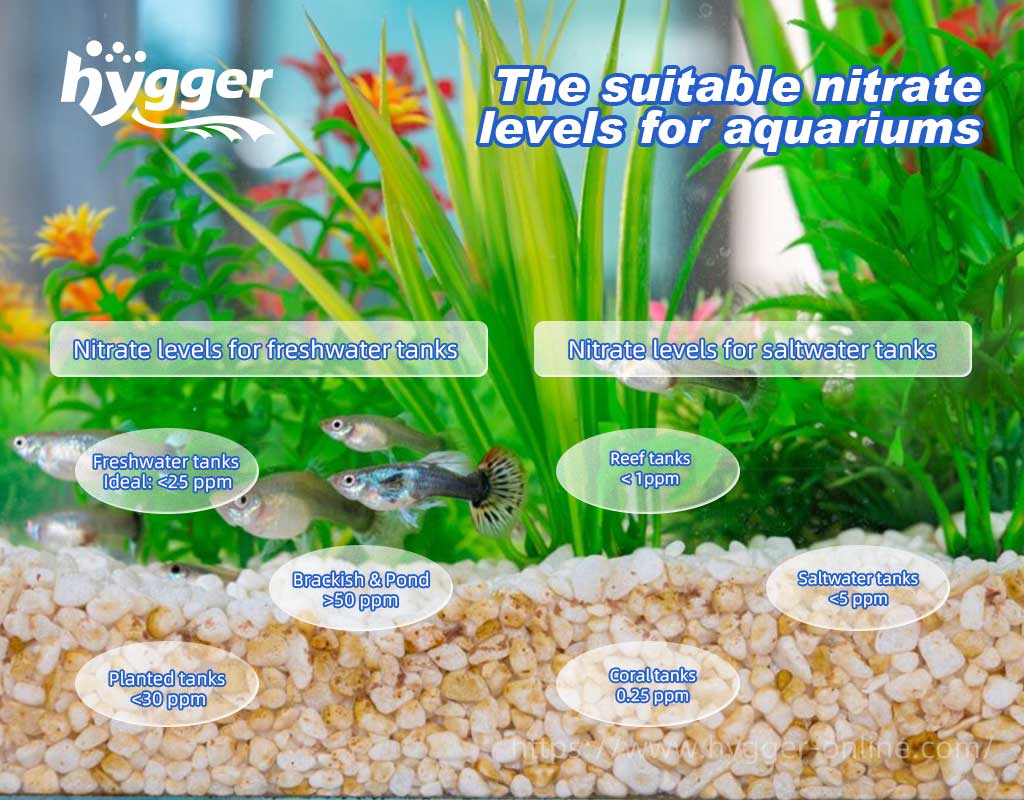
Credit: www.hygger-online.com
Controlling Feeding Habits
Managing your guppies’ feeding habits is key to controlling nitrate levels in their tank. Overfeeding can lead to waste buildup and poor water quality.
Proper feeding not only keeps your guppies healthy but also maintains a cleaner environment. Let’s explore some tips on how to achieve this.
Proper Feeding Amounts
Feeding the correct amount is crucial for guppy health. Too much food can pollute the tank. Offer only what they can eat in two minutes.
Feeding Frequency
Guppies thrive on regular feeding schedules. Offer small portions twice a day to prevent waste accumulation.
- Morning feeding around 9 AM
- Evening feeding around 6 PM
Selecting Quality Food
Quality food ensures your guppies get the nutrients they need. Choose food that is rich in proteins and vitamins.
Consider the following types of food:
- Flakes: Easy to digest and widely available
- Frozen foods: High in protein and freshness
- Live foods: Great for variety and enrichment
Cleaning And Maintenance
Keeping your guppy tank clean helps control nitrate levels. Regular maintenance ensures a healthy environment for your fish.
Here are some essential tips to maintain your aquarium and keep nitrates in check.
Gravel Vacuuming
Gravel vacuuming is crucial for removing waste and uneaten food. This helps in reducing nitrate buildup.
- Use a siphon to clean the gravel weekly.
- Move the siphon through the substrate to collect debris.
- Avoid disturbing fish while cleaning.
Removing Debris
Debris in your tank can lead to increased nitrate levels. Regularly removing debris is essential.
Filter Maintenance
Maintaining your filter ensures it runs efficiently and aids in nitrate control.
- Check and clean the filter monthly.
- Replace filter media as recommended.
- Ensure proper water flow through the filter.
Using Nitrate-reducing Products
Controlling nitrate levels is key for a healthy guppy tank. High nitrate harms fish and plants. Using nitrate-reducing products helps keep water safe and clean.
These products come in different forms. Some absorb nitrate directly. Others use chemicals or natural methods to lower nitrate. Learn how to use them effectively.
Nitrate Absorbing Media
Nitrate absorbing media are special filter materials. They trap and hold nitrate from the water. Common types include bio balls, zeolite, and specialized resins.
- Replace media regularly for best results.
- Rinse media with tank water to avoid killing good bacteria.
- Combine with other filtration methods for stronger nitrate control.
Chemical Additives
Chemical additives can reduce nitrate by breaking it down or locking it away. Use these products carefully. Follow the instructions on the label.
| Product Type | How It Works | Usage Tips |
| Nitrate Remover Liquids | Neutralize nitrate chemically | Add dose weekly, avoid overdosing |
| Denitrifying Bacteria | Convert nitrate to nitrogen gas | Use in filter or substrate |
| Nitrate Absorbing Resins | Bind nitrate ions | Replace monthly for best effect |
Natural Remedies
Natural remedies use plants and natural processes to lower nitrate. Live plants absorb nitrate during growth. Regular water changes also help.
- Add fast-growing plants like hornwort or duckweed.
- Keep substrate clean to reduce waste buildup.
- Feed fish less to avoid excess nitrate formation.

Credit: jungleaquatics.com
Frequently Asked Questions
How To Reduce Nitrate Levels In Guppy Tanks?
Regular water changes and proper filtration help reduce nitrate in guppy tanks. Avoid overfeeding and remove uneaten food promptly. Live plants absorb nitrates, improving water quality. Test water weekly to monitor nitrate levels and maintain a clean, balanced environment for your guppies.
Why Is Nitrate Control Important For Guppies?
High nitrate levels stress guppies, weaken their immune system, and cause health issues. Controlling nitrate ensures better growth, vibrant colors, and longer lifespan. Maintaining low nitrate levels promotes a stable, healthy aquarium environment, preventing algae overgrowth and disease outbreaks in guppy tanks.
What Plants Help Control Nitrates In Guppy Tanks?
Fast-growing aquatic plants like hornwort, anacharis, and java moss absorb nitrates efficiently. These plants reduce nitrate levels naturally while providing shelter and oxygen. Including live plants in guppy tanks supports nitrate control and enhances the overall ecosystem balance.
How Often Should I Test Nitrate In Guppy Tanks?
Test nitrate levels at least once a week using reliable aquarium test kits. Frequent testing helps detect spikes early and allows timely corrective actions. Consistent monitoring keeps nitrate within safe limits, ensuring a healthy habitat for guppies.
Conclusion
Controlling nitrate levels keeps guppies healthy and happy. Regular water changes reduce nitrate buildup effectively. Avoid overfeeding to stop excess nitrate production. Use live plants to absorb nitrates naturally. Test water often to catch problems early. Clean filters help maintain good water quality.
Small steps create a stable tank environment. Healthy fish show bright colors and active swimming. Careful nitrate control leads to a thriving guppy tank. Keep these tips in mind for lasting success.