
Are you ready to take your discus fish hobby to the next level? Selective breeding can help you create stunning, healthy discus with unique colors and patterns that stand out.
But where do you start? This guide breaks down everything you need to know in simple steps, so you can confidently breed discus that impress every time. Keep reading to unlock the secrets that will transform your aquarium into a vibrant showcase of your own making.
Your discus journey is about to get exciting!

Credit: www.amazon.com
Choosing Discus Breeding Stock
Choosing the right discus fish for breeding is very important. Good stock helps create healthy and strong offspring.
This guide will explain traits to look for, how to select healthy fish, and age and size matters.
Traits To Look For
Look for bright colors and clear patterns on the fish. These traits pass on to babies well. Also, choose fish with smooth and rounded fins.
- Strong body shape without deformities
- Clear eyes with no cloudiness
- Consistent color and pattern
- Active and alert behavior
Healthy Fish Selection
Healthy fish show no signs of disease or stress. Their skin is free from spots or wounds. Look for fish that swim steadily and eat well.
| Health Indicator | What to Check |
| Skin | No white spots, redness, or ulcers |
| Fins | Not torn or clamped |
| Breathing | Normal rate, no gasping |
| Behavior | Active, not hiding or floating |
Age And Size Considerations
Choose discus fish that are at least 1 year old. At this age, they are mature enough to breed. Size should be around 5 to 6 inches.
- Fish under 1 year may not breed well.
- Larger fish tend to be stronger breeders.
- Match males and females close in size.
- Avoid fish that are too old or very small.
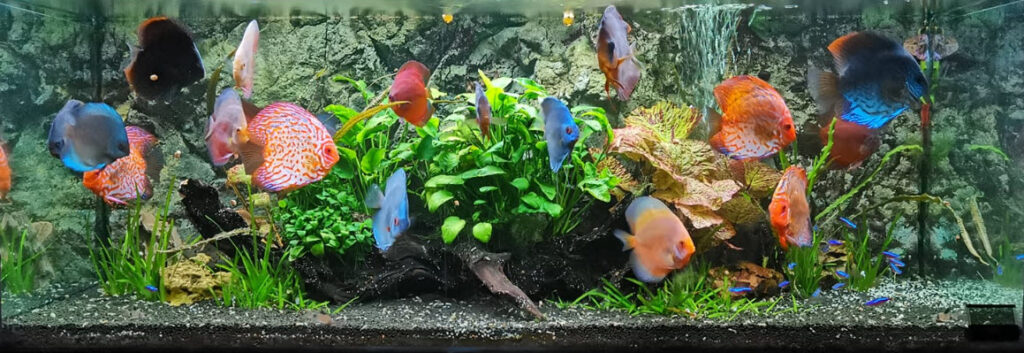
Credit: aquainfo.nl
Setting Up The Breeding Tank
Setting up a breeding tank for discus fish needs care and attention. The right environment helps discus breed well and stay healthy.
This guide covers the main points to prepare your tank for successful discus breeding.
Ideal Tank Size And Environment
A breeding tank should be large enough for the discus to swim freely. It also needs space for decorations and hiding spots.
Discus prefer calm water with low flow and stable temperatures. The tank should be quiet with little disturbance.
- Minimum tank size: 20 gallons for a pair
- Soft substrate or bare bottom
- Low water current
- Stable temperature between 82-86°F (28-30°C)
- Quiet location away from noise
Water Quality And Parameters
Good water quality is important for discus breeding success. Clean water helps eggs and fry survive.
Keep the water soft and slightly acidic. Test water often to keep parameters steady.
- pH level: 6.0 to 6.5
- Water hardness: 1-4 dGH (soft water)
- Temperature: 82-86°F (28-30°C)
- Ammonia and nitrite: 0 ppm
- Nitrate: below 10 ppm
- Use gentle filtration to avoid strong currents
Decor And Spawning Surfaces
Discus need safe places to lay eggs. Provide flat surfaces and some cover for protection.
Plants and driftwood can create hiding spots but keep space clear for swimming.
- Use flat stones or slate for egg laying
- Include broad-leaf plants or artificial leaves
- Add driftwood for shelter and natural feel
- Keep decorations easy to clean
- Leave open swimming space in the center
Breeding Behavior Of Discus
Discus fish have unique breeding habits that are interesting to watch. Understanding their behavior helps in successful breeding.
They form strong pairs and show special signs before spawning. Watching these signs is important for breeders.
Signs Of Readiness
Discus show clear signs when they are ready to breed. Their colors become brighter and more vivid. They also clean a flat surface together.
They swim closer and stay near each other more often. Males may become more territorial and protective of their space.
- Bright and intense colors
- Cleaning a flat surface for eggs
- Staying close to each other
- Increased territorial behavior by males
Pair Bonding And Courtship
Discus form strong bonds before breeding. They swim side by side and touch fins gently. This helps build trust between them.
During courtship, they often circle each other. The male will show off his colors and body to attract the female. Both parents take part in guarding their chosen spot.
- Swimming side by side
- Gentle fin touching
- Circular swimming patterns
- Male displays bright colors
- Both parents guard the area
Spawning Process
Discus lay eggs on clean flat surfaces like leaves or aquarium glass. The female deposits eggs in rows. The male follows to fertilize them.
Both parents protect the eggs by fanning them with their fins. They remove any bad eggs to keep the batch healthy. Eggs hatch in about two days.
- Eggs laid in rows on flat surfaces
- Male fertilizes eggs right after laying
- Parents fan eggs to provide oxygen
- Removal of unfertilized or fungus-infected eggs
- Eggs hatch in about 48 hours
Selective Breeding Techniques
Selective breeding helps improve discus fish traits over time. It involves choosing specific fish to mate.
This process can create healthier, stronger, and more colorful discus fish. Careful planning is important for success.
Pair Selection Strategies
Selecting the right pairs is key for good offspring. Look for discus with desired traits and healthy genes.
Choose fish that complement each other to avoid passing bad traits. Observe behavior and physical health closely.
- Pick fish with strong colors and shapes
- Avoid pairing close relatives
- Check for active and healthy fish
- Match sizes that are compatible
Maintaining Genetic Diversity
Keep genetic diversity high to prevent weaknesses in discus fish. This helps avoid diseases and deformities.
Use different breeding pairs from various bloodlines. Rotate breeding fish regularly to keep genes fresh.
- Use fish from multiple sources
- Keep track of family history
- Limit inbreeding to less than 10%
- Introduce new fish every few generations
Enhancing Desired Traits
Focus on traits like color, size, and fin shape to improve discus fish. Select fish showing these traits strongly.
Breed fish that have the best examples of traits. Over time, these traits will become more common in offspring.
- Choose parents with vivid colors
- Pick fish with symmetrical body shapes
- Use fish with good health and stamina
- Record traits in each generation
Egg And Fry Care
Caring for discus eggs and fry is important to grow healthy fish. Proper care helps reduce deaths and illness.
This guide explains how to protect eggs, feed fry, and prevent common problems in discus breeding.
Protecting Eggs
Discus eggs are delicate and need a clean, safe environment. Remove parents if they harm the eggs.
- Keep water temperature steady between 82°F and 86°F (28°C to 30°C).
- Use a gentle filter to avoid disturbing eggs.
- Remove any fungus by using antifungal treatment safe for eggs.
- Keep lighting low to reduce stress on eggs.
Fry Feeding And Growth
Fry need proper food to grow strong. Feed small amounts often for best results.
| Age of Fry | Food Type | Feeding Frequency |
| 1-7 days | Egg yolk or infusoria | 4-6 times daily |
| 8-14 days | Baby brine shrimp | 3-4 times daily |
| 15+ days | Finely crushed flakes or pellets | 2-3 times daily |
Preventing Common Issues
Watch for signs of disease or poor water quality. Acting fast helps fry survive.
- Test water daily for ammonia and nitrite levels.
- Change 10-20% of water each day to keep it clean.
- Remove dead eggs and fry immediately.
- Keep tank temperature stable to avoid stress.
- Use a quarantine tank for sick fry.
Common Challenges And Solutions
Selective breeding of discus fish can be a rewarding yet challenging endeavor. Understanding common challenges can improve breeding success.
This guide addresses some typical issues and provides solutions to common problems faced by breeders.
Breeding Failures
Breeding failures can occur for various reasons. Identifying the cause is essential for improvement.
- Ensure water conditions are optimal.
- Provide a stress-free environment.
- Check for genetic compatibility of breeding pairs.
Health Problems
Health issues in discus fish can hinder breeding success. Regular health checks are vital.
| Problem | Solution |
| Parasitic infections | Use appropriate medication |
| Nutritional deficiencies | Provide a balanced diet |
| Fungal diseases | Maintain clean water conditions |
Environmental Stressors
Environmental factors greatly affect the breeding process. Minimize stressors for better outcomes.
Expert Tips For Success
Selective breeding of discus fish is an art and a science. It requires patience, knowledge, and attention to detail. Breeding success comes from understanding the needs of these colorful fish.
Follow these expert tips to improve your discus breeding efforts. Each step focuses on making the best environment for your fish.
Monitoring And Adjusting Conditions
Discus fish need stable water conditions. Check water temperature and pH regularly. Ideal temperature is between 82°F and 86°F.
Adjust the pH level to between 6.0 and 7.0. Use a reliable water testing kit. Be consistent with your monitoring routine.
- Use a heater to maintain temperature
- Invest in a quality pH meter
- Keep a log of daily water conditions
Record Keeping
Keeping records helps track breeding success. Note down dates of breeding attempts and outcomes. Include water conditions and any changes made.
Documenting this information provides insights for future breeding. It helps identify patterns and improve techniques over time.
| Date | Water Temperature | pH Level | Outcome |
| 01/01/2023 | 84°F | 6.5 | Successful |
| 01/15/2023 | 82°F | 6.8 | Unsuccessful |
Continuous Learning
Learning never stops in discus breeding. Join online forums and read books on discus care. Attend workshops or seminars if available.
Networking with other breeders offers new insights. Sharing experiences helps improve your own breeding practices.
- Read the latest discus care articles
- Participate in breeder forums
- Exchange tips with fellow breeders
Credit: mail.sadio.org.ar
Frequently Asked Questions
What Is Selective Breeding In Discus Fish?
Selective breeding in discus fish involves choosing specific parents to produce offspring with desired traits. It improves color, shape, and health through controlled mating.
How To Choose Discus Fish For Selective Breeding?
Choose healthy, vibrant discus with strong genetics and ideal traits. Look for disease-free fish with good coloration and body shape for best results.
What Are The Benefits Of Selective Breeding Discus?
Selective breeding enhances discus fish quality, coloration, and disease resistance. It creates unique strains and improves overall aquarium fish stock health.
How Often Should Discus Fish Breed Selectively?
Discus fish can breed every few months under ideal conditions. Avoid overbreeding to maintain fish health and ensure strong offspring quality.
Conclusion
Selective breeding helps create healthier and more beautiful discus fish. Patience and care guide the process step by step. Watch your fish grow stronger and more vibrant each day. Keep learning and adjusting to improve your results. Enjoy the journey of raising unique discus varieties.
Your effort brings rewarding outcomes in your aquarium.