
Are you ready to unlock the full potential of your business or home? Water treatment is more than just cleaning water—it’s the key to growth.
When your water is pure and safe, everything improves: your health, your productivity, even your bottom line. Imagine cutting costs, boosting efficiency, and protecting what matters most, all by focusing on the water you use every day. Keep reading to discover how water treatment can transform your world and fuel your success.

Credit: www.futuremarketinsights.com
Water Treatment Technologies
Water treatment technologies help clean water for safe use. They remove dirt, germs, and harmful chemicals from water.
Different technologies target different pollutants. Choosing the right method depends on water quality and use.
Filtration Methods
Filtration removes particles and solids from water. It uses physical barriers like screens or membranes.
Common filters include sand filters, carbon filters, and membrane filters. Each type catches different sizes of particles.
- Sand filters trap large particles like dirt and debris
- Carbon filters remove bad tastes and odors
- Membrane filters block tiny particles and some germs
Chemical Treatment
Chemical treatment adds substances to water. These chemicals kill germs or change pollutants.
Common chemicals include chlorine and ozone. They help disinfect water and remove harmful substances.
- Chlorine kills bacteria and viruses
- Ozone removes color and bad smells
- Coagulants make particles clump for easy removal
Biological Processes
Biological processes use microbes to clean water. These microbes eat harmful organic materials.
These processes work in tanks or ponds. They break down waste into less harmful substances.
- Activated sludge uses bacteria to digest waste
- Biofilters pass water through materials where microbes grow
- Anaerobic digestion breaks down waste without oxygen
Advanced Oxidation
Advanced oxidation uses strong chemicals and light. It destroys tough pollutants in water.
This process creates reactive molecules that break down harmful compounds. It is good for removing chemicals and germs.
- Uses hydrogen peroxide and UV light
- Breaks down pesticides and organic pollutants
- Improves water clarity and safety
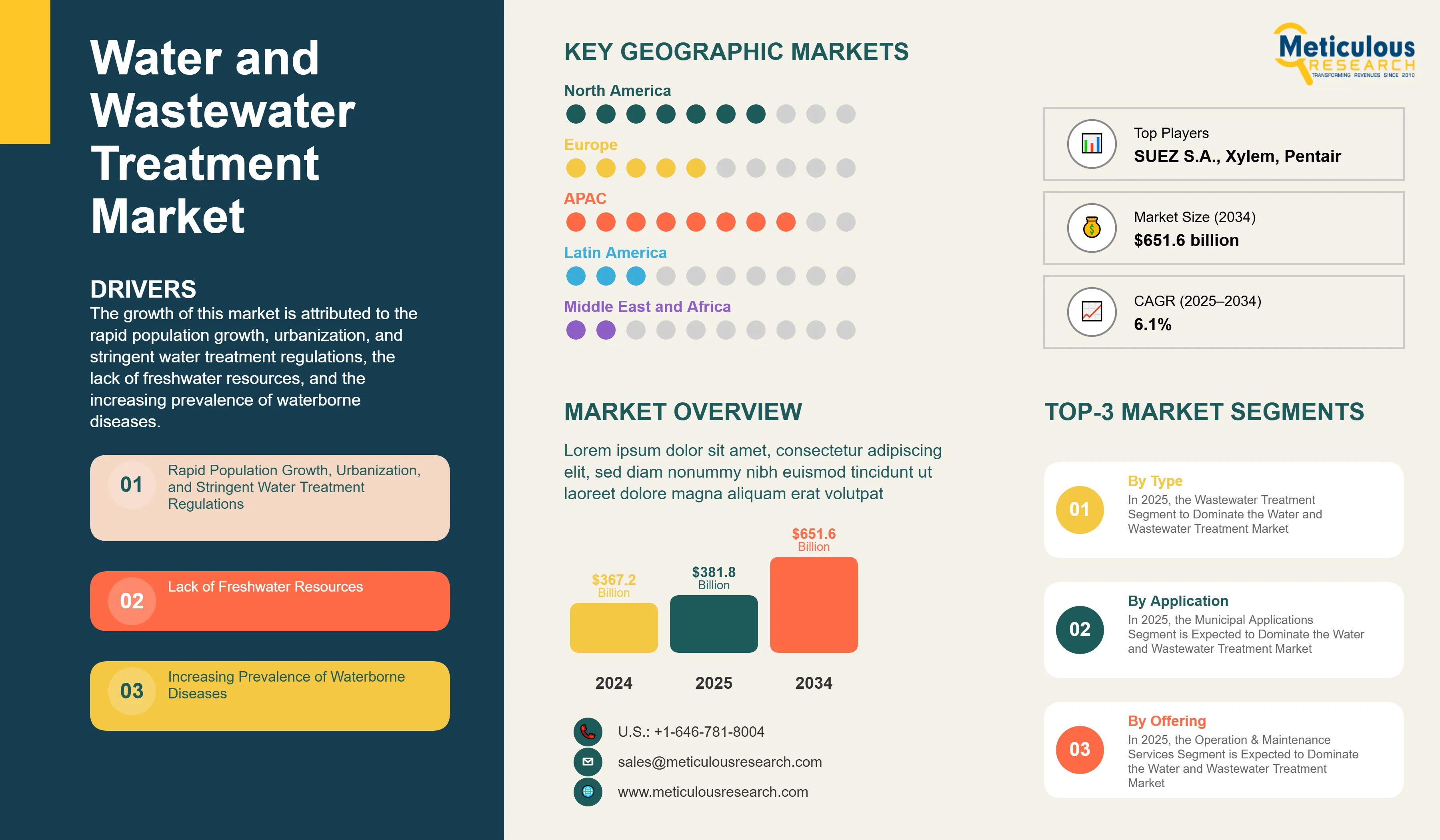
Credit: www.meticulousresearch.com
Improving Efficiency
Water treatment is key to providing clean water. Improving efficiency saves resources and lowers costs.
Better efficiency means less energy use and less waste. It helps protect the environment too.
Optimizing System Design
Good system design makes water treatment run smoothly. It reduces downtime and increases output.
Design should match water quality and volume needs. Proper sizing of equipment prevents overload.
- Choose the right filters and membranes
- Plan pipes to reduce pressure loss
- Use modular designs for easy upgrades
- Include backup systems for reliability
Automation And Monitoring
Automation controls water treatment processes. It reduces human errors and increases consistency.
Monitoring systems track water quality and equipment status. Early alerts help fix problems fast.
- Use sensors to check water parameters
- Automate chemical dosing and flow rates
- Set alarms for unusual readings
- Analyze data to improve operations
Energy-saving Techniques
Energy use is a big cost in water treatment. Saving energy lowers expenses and carbon footprint.
Use efficient pumps and motors. Recover energy from processes where possible.
- Install variable speed drives on pumps
- Use energy-efficient lighting and controls
- Recover heat from treated water
- Maintain equipment to keep efficiency high
Sustainability Practices
Water treatment plays a key role in protecting our environment. Using sustainable methods can save resources and reduce pollution. These practices help communities grow while caring for the planet.
This guide covers three important areas: water reuse and recycling, reducing chemical use, and minimizing waste production. Each area shows ways to treat water safely and responsibly.
Water Reuse And Recycling
Reusing and recycling water reduces the need for fresh water. It helps save energy and lowers costs. Treated water can be used for irrigation, cleaning, or industrial processes.
- Collect rainwater for reuse
- Treat greywater for garden irrigation
- Recycle wastewater in factories
- Use water-efficient fixtures to reduce waste
Reducing Chemical Use
Using fewer chemicals in water treatment limits harm to ecosystems. Natural treatment methods can replace some chemicals. This keeps water cleaner and safer for plants and animals.
| Method | Description |
| Biological Treatment | Uses bacteria to break down waste |
| UV Disinfection | Kills germs without chemicals |
| Phytoremediation | Plants absorb pollutants from water |
Minimizing Waste Production
Lowering waste from water treatment saves space and cost. Proper waste handling protects the environment. Recycling sludge and other byproducts turns waste into useful materials.
- Separate solids before treatment
- Use sludge for compost or fuel
- Recycle packaging materials
- Monitor treatment processes to avoid excess waste
Economic Benefits
Water treatment plays a key role in supporting business growth. It helps save money and improves efficiency. Clean water reduces risks and protects equipment.
Investing in water treatment can boost profits. Companies see long-term savings and better resource use. This makes water treatment a smart economic choice.
Cost Reduction Strategies
Water treatment lowers expenses by reducing waste and damage. It helps businesses use water more efficiently. This cuts water bills and repair costs.
Proper water treatment also extends the life of machines. Clean water prevents rust and buildup. This means fewer breakdowns and less downtime.
- Reuse treated water to reduce water buying costs
- Prevent equipment damage with clean water
- Lower energy use by improving water quality
- Cut fines by meeting environmental rules
Long-term Investment Gains
Spending on water treatment brings steady financial returns. Businesses save money on water and energy over time. Investments also reduce risks from pollution penalties.
Good water treatment improves product quality and customer trust. This helps companies grow their market share. Long-term savings make water treatment a strong business asset.
- Lower operating costs through efficient water use
- Protect assets with clean water systems
- Enhance brand reputation by meeting standards
- Reduce risks of legal fines and shutdowns
Incentives And Regulations
Governments offer financial rewards for using water treatment systems. These include tax breaks and grants. Following regulations avoids costly fines and legal issues.
Compliance with water laws helps companies build good community relations. It also opens doors for new business opportunities. Staying updated with rules ensures continued economic benefits.
- Tax credits for installing water treatment equipment
- Grants to support water-saving projects
- Penalties for pollution violations encourage treatment
- Regulations set standards for water quality
Case Studies
Water treatment plays a key role in supporting growth across many sectors. It helps industries and communities use water safely and efficiently.
These case studies show how water treatment projects solve real problems and improve water quality worldwide.
Industrial Success Stories
Factories use water treatment to reduce waste and save money. Clean water helps them meet safety rules and protect workers.
One factory cut water use by 40% by recycling treated water. This lowered costs and reduced pollution.
- Reduced water consumption by recycling
- Lowered harmful chemicals in wastewater
- Improved worker safety with cleaner water
- Complied with government regulations
Municipal Water Treatment
Cities treat water to keep it safe for drinking and daily use. Treatment plants remove germs and harmful substances.
One city built a new plant that cleans water faster. It now provides safe water to 50,000 more people.
- Improved water safety for residents
- Expanded water supply to growing populations
- Used modern filters to remove contaminants
- Lowered disease risks linked to water
Innovative Projects
New technologies help treat water in smart ways. Some projects use solar power or natural materials to clean water.
A pilot project used plants to remove heavy metals. This eco-friendly method showed good results in short time.
- Solar-powered water treatment units
- Using plants to clean polluted water
- Low-cost methods for rural areas
- Tests show fast and effective cleaning

Credit: www.transparencymarketresearch.com
Frequently Asked Questions
What Is Water Treatment For Growth?
Water treatment for growth involves purifying water to support plant and industrial growth. It removes contaminants and improves water quality. This ensures healthier crops, better yields, and sustainable development in agriculture and industries.
How Does Water Treatment Boost Agricultural Growth?
Water treatment removes harmful chemicals and pathogens from irrigation water. Clean water enhances soil health and plant nutrient absorption. This results in stronger plants, increased crop yields, and reduced disease risks in agriculture.
What Are Common Water Treatment Methods Used?
Common methods include filtration, sedimentation, chlorination, and reverse osmosis. Each method targets specific contaminants to improve water quality. Combining methods ensures thorough purification for growth applications.
Why Is Water Treatment Important For Industrial Growth?
Treated water prevents equipment corrosion and contamination in industries. It ensures product quality and operational efficiency. Clean water also meets environmental regulations, supporting sustainable industrial growth.
Conclusion
Clean water helps plants and businesses grow strong and healthy. Treating water removes harmful stuff and keeps systems safe. Good water care saves money and protects the environment. Simple steps can improve water quality every day. Growth depends on water that is pure and reliable.
Make water treatment a regular part of your plan. Watch your progress improve with steady, clean water use. Water treatment is key to healthy growth and success.