
If you have a large reef tank, you know how important it is to have the right support underneath it. An aquarium stand for large reef tanks isn’t just a piece of furniture—it’s the foundation that keeps your underwater world safe and stable.
Choosing the wrong stand can lead to costly damage, stress, and even loss of your beautiful corals and fish. You’ll discover exactly what to look for in a stand that matches your tank’s size and weight. By the end, you’ll feel confident about making the best choice to protect your reef and create a stunning display you’ll be proud of.
Keep reading to find out how to secure your investment and keep your reef thriving.
Choosing The Right Material
Picking the right material for your aquarium stand is very important. The stand must hold the heavy weight of a large reef tank safely.
Different materials offer strength, style, and durability. You should choose one that fits your needs and room design.
Wood Options For Strength And Style
Wood is a popular choice for aquarium stands. It looks natural and matches many home styles.
Hardwoods like oak, maple, and cherry are strong and last long. Softwoods can also work but need extra care.
- Hardwoods offer good support and last many years
- Wood can be stained or painted to fit room colors
- Proper sealing helps protect wood from water damage
Metal Stands For Durability
Metal stands are very strong and support heavy tanks well. They resist bending or breaking under pressure.
Steel and aluminum are common metals used. Steel is heavier but very tough. Aluminum is lighter and resists rust better.
- Metal stands often have a modern look
- Powder-coated finishes prevent rust and corrosion
- Metal frames need pads to protect floors from scratches
Composite Materials Benefits
Composite materials mix wood fibers with plastic or resin. They offer strength and resist water damage well.
These stands need less maintenance and last long in humid or wet areas. They can also look like real wood.
- Composite stands resist warping and rotting
- They are often lighter than pure wood stands
- Easy to clean and require little upkeep
Weight Capacity And Support
An aquarium stand must hold the full weight of a large reef tank. This includes the tank, water, rocks, and equipment. Proper support keeps the tank safe and stable.
Choosing or building the right stand requires knowing how much weight it can hold. The stand must distribute weight evenly to prevent damage.
Calculating Tank Weight
Calculate the total weight by adding the tank and contents. Water is heavy, so include its weight carefully. Add rocks, sand, and equipment weight.
- Find the tank’s volume in gallons
- Multiply gallons by 8.34 for water weight (lbs)
- Add the tank’s empty weight
- Add weight of rocks and equipment
Reinforcement Techniques
Strong stands use reinforcement to hold heavy tanks. Reinforcing helps the stand resist bending and breaking. Use good materials and extra supports.
- Use thick plywood or metal for the frame
- Add cross braces for extra strength
- Use strong screws and bolts, not nails
- Install center supports under the tank
Load Distribution Methods
Distribute the tank’s weight evenly across the stand. This prevents stress points that can cause damage. A flat, level surface helps spread the load.
- Use a solid base that covers the full tank bottom
- Place support beams under the frame evenly
- Use foam or padding to fill gaps and absorb pressure
- Check that the stand is level on the floor
Design Features To Consider
Choosing the right stand for a large reef tank is important. The stand supports the tank and holds equipment safely.
Good design helps keep the tank stable and makes maintenance easier. Consider these features when picking a stand.
Open Vs. Enclosed Stands
Open stands have no doors or panels on the sides. They allow easy access to equipment and tubing under the tank.
Enclosed stands have walls or doors that hide equipment. They look cleaner but may limit quick access.
- Open stands offer better ventilation
- Enclosed stands protect equipment from dust
- Open stands show plumbing and wiring
- Enclosed stands create a neater appearance
Storage Space Integration
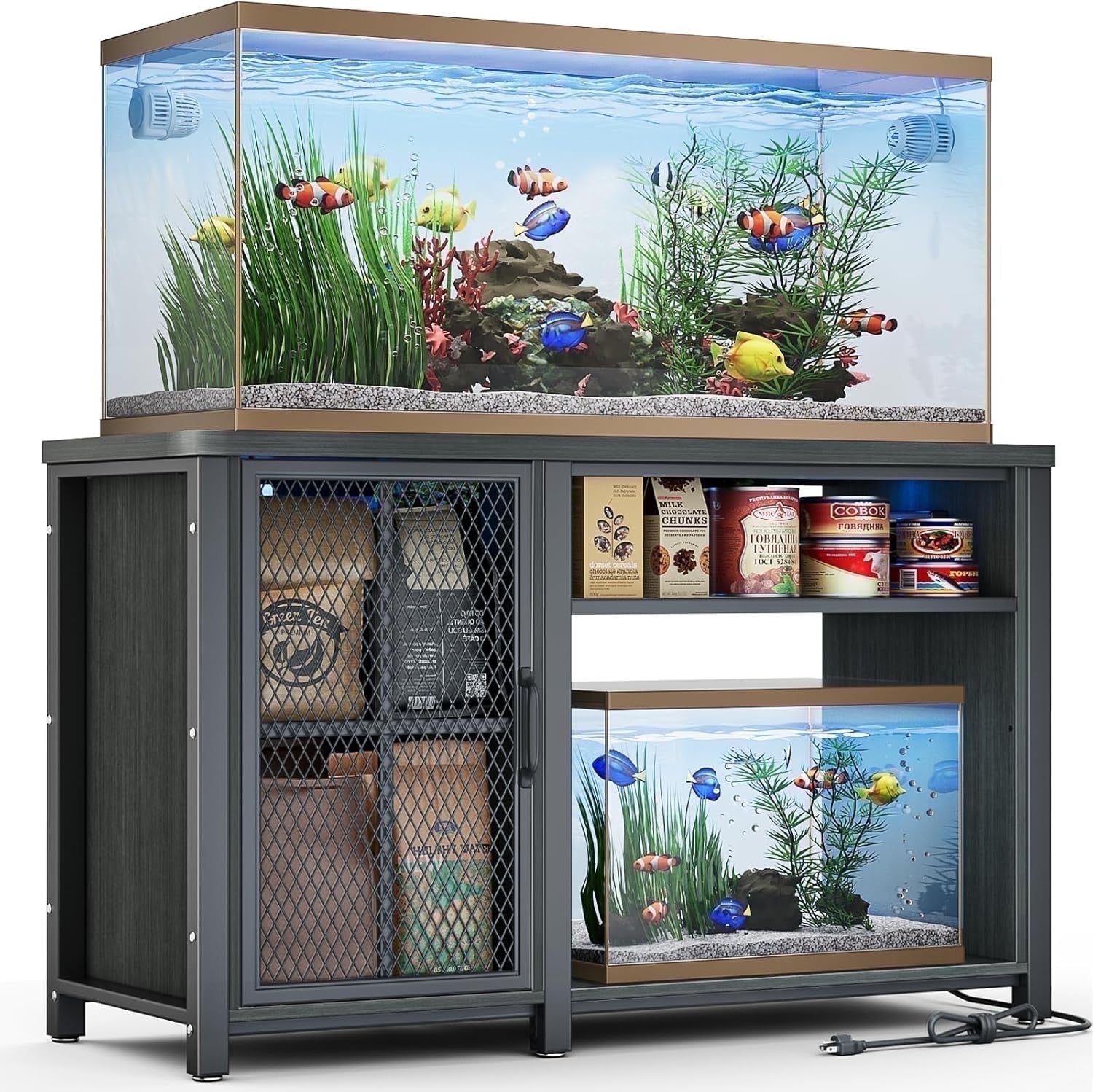
Many stands include storage areas for supplies and tools. This keeps everything organized and nearby.
Look for shelves, cabinets, or drawers that fit your needs. Easy access to food, chemicals, and tools saves time.
- Shelves hold tanks, containers, and small equipment
- Cabinets hide clutter and keep supplies safe
- Drawers store tools, nets, and cleaning items
- Choose storage based on what you use most often
Cable And Equipment Management
Organizing cables and equipment prevents damage and makes the tank look tidy. It also helps with maintenance.
Good stands have holes, clips, or channels for wires and hoses. This keeps them secure and out of the way.
- Use built-in holes to pass cables safely
- Clips hold cords in place and prevent tangling
- Channels guide hoses and wires neatly
- Proper management reduces risk of water damage

Credit: theplecofeeder.com
Style And Aesthetic Appeal
An aquarium stand for large reef tanks is more than just a support. It shapes the room’s look and feel. Choosing the right style helps your aquarium blend with your space.
Good design adds beauty and balance. It highlights the colors and life inside your reef tank.
Matching Room Decor
Your aquarium stand should fit the room’s style. This creates a smooth and pleasant look. Think about your furniture, walls, and flooring before picking a stand.
- Choose wood tones that match your furniture.
- Use colors that complement your wall paint.
- Pick a stand shape that fits the room layout.
- Consider the room’s lighting for finish choices.
Custom Finishes And Paints
Custom finishes make your stand unique. You can match colors or add texture to fit your style. Paints protect the stand and add charm.
| Finish Type | Effect | Best For |
| Glossy Paint | Shiny, bright look | Modern rooms |
| Matte Paint | Soft, muted look | Natural or rustic rooms |
| Wood Stain | Shows wood grain | Traditional or classic rooms |
| Textured Finish | Rough or patterned surface | Artistic or eclectic rooms |
Minimalist Vs. Ornate Designs
Minimalist stands use clean lines and simple shapes. They keep focus on the reef tank. Ornate stands add decorations and details. They make a bold style statement.
- Minimalist designs fit modern and small spaces.
- Ornate designs suit classic and large rooms.
- Minimalist stands are easier to clean and maintain.
- Ornate stands show craftsmanship and luxury.
Installation And Maintenance Tips
Setting up an aquarium stand for large reef tanks needs care. Proper installation keeps your tank safe and stable.
Regular maintenance helps protect your stand from damage. It also ensures a long life for your setup.
Proper Leveling Techniques
Leveling the stand is key to prevent stress on the tank glass. Use a spirit level to check all sides carefully.
If the floor is uneven, add shims or adjustable feet under the stand. This keeps the tank stable and safe.
- Place the stand on a flat, solid surface
- Use a bubble level across front and sides
- Adjust feet or add shims as needed
- Re-check level after placing the tank
Protecting Against Moisture
Moisture can damage wooden or metal stands over time. Protect the stand by using water-resistant coatings or sealants.
Place a waterproof mat or tray under the tank to catch spills. Wipe up any water quickly to avoid damage.
- Apply waterproof paint or varnish on wood
- Use rust-proof coatings on metal parts
- Keep the stand away from direct water contact
- Clean spills immediately
Routine Inspection Checklist
Check your aquarium stand often to catch problems early. Look for signs of wear, damage, or instability.
Fix issues quickly to keep your reef tank safe and secure. Use this checklist to guide your inspections.
- Look for cracks or warping in wood
- Check metal parts for rust or corrosion
- Ensure all screws and bolts are tight
- Confirm the stand remains level
- Inspect for water damage or mold

Credit: www.walmart.com
Popular Brands And Models
Finding the right aquarium stand for large reef tanks is important. A solid stand offers support and safety for your tank. Let’s explore some popular brands and models.
Different stands suit various tank sizes and styles. Choose one that matches your aquarium’s needs and your budget.
Top-rated Stands For Large Tanks
Top-rated stands are known for their quality and durability. These stands are designed to support large tanks securely.
- MarineLand Majesty Stand
- Innovative Marine APS Stand
- Red Sea Reefer Stand
Budget-friendly Options
Budget-friendly options offer good value without compromising on safety. These stands are affordable and reliable.
| Brand | Model | Price Range |
| Aqua Culture | Deluxe Stand | $50-$100 |
| Imagitarium | Brooklyn Stand | $100-$150 |
Custom Build Services
Custom build services offer personalized solutions. They design stands to fit specific tank sizes and styles.
Credit: www.walmart.com
Frequently Asked Questions
What Is The Best Material For Large Reef Tank Stands?
Steel and hardwood are the best materials for large reef tank stands. They provide strong support and durability. These materials resist moisture and corrosion, ensuring long-term stability for heavy aquarium setups. Proper construction and quality materials prevent stand failure and protect your investment.
How Do I Ensure My Aquarium Stand Supports Heavy Reef Tanks?
Check the weight capacity before buying a stand. The stand must support the tank’s full weight when filled with water, rocks, and corals. Reinforced frames and solid construction enhance stability. Always follow manufacturer guidelines and consider custom stands for extra-large tanks.
Can I Build A Diy Stand For A Large Reef Tank?
Yes, but it requires precise measurements and quality materials. Use strong wood or metal and ensure level, sturdy construction. DIY stands must handle the tank’s full weight safely. If unsure, consult professionals to avoid costly mistakes and ensure safety.
Why Is Water Resistance Important In Reef Tank Stands?
Water resistance prevents damage from spills and humidity in reef tanks. Stands exposed to moisture can warp, weaken, or rot. Water-resistant finishes or materials extend the stand’s life and maintain structural integrity, protecting both the tank and your floor.
Conclusion
Choosing the right aquarium stand keeps your reef tank safe and steady. Strong materials and good design support heavy water and rocks well. A proper stand helps prevent accidents and damage to your tank. It also makes cleaning and maintenance easier every day.
Take time to measure and pick a stand that fits your space perfectly. This small step protects your investment and keeps your reef healthy. Enjoy your beautiful tank with peace of mind and confidence.