
Choosing the right flow rate for your aquarium filter can make all the difference in keeping your tank healthy and vibrant. If you’re unsure how fast your filter should move water, you’re not alone.
Too slow, and waste builds up; too fast, and your fish might get stressed. This guide will help you understand exactly what flow rate works best for your tank size and the type of fish you keep. By the end, you’ll know how to optimize your filter to create the perfect environment for your aquatic friends.
Ready to make your aquarium cleaner and your fish happier? Let’s dive in!
What Is Flow Rate
Flow rate is the speed at which water moves through an aquarium filter. It shows how much water the filter cleans each hour.
Understanding flow rate helps keep the aquarium water clean and healthy for fish and plants.
Definition Of Flow Rate
Flow rate measures water volume passing through the filter in one hour. It is usually shown in gallons per hour (GPH) or liters per hour (LPH).
A higher flow rate means more water is filtered faster. A lower flow rate filters water slower.
Proper flow rate keeps water clean and clear. It removes waste and harmful chemicals from the water.
Too fast flow can stress fish or disturb plants. Too slow flow may not clean water well enough.
How To Choose The Right Flow Rate
Choose a flow rate that cleans your aquarium water at least 4 times per hour. Multiply the tank size by 4 to find this number.
- For a 20-gallon tank, aim for 80 GPH
- For a 50-gallon tank, aim for 200 GPH
- For a 100-gallon tank, aim for 400 GPH
Adjust flow rate if your fish prefer calm or fast water conditions.
Factors Affecting Flow Rate
Filter size, pump strength, and filter media affect flow rate. Clogged filters also reduce flow.
- Large filters usually have higher flow rates
- Strong pumps push more water
- Dirty filter media lowers flow rate
Regular cleaning keeps flow rate steady and effective.
Why Flow Rate Matters
Flow rate controls how much water passes through the filter. It affects water cleanliness and fish health.
Choosing the right flow rate helps keep your aquarium balanced and safe for its inhabitants.
Maintaining Water Clarity
A proper flow rate moves water through the filter fast enough to remove waste and particles. This keeps water clear and reduces algae growth.
Supporting Fish Health
Fish need clean water with enough oxygen. A good flow rate helps oxygenate water and removes harmful chemicals.
- Prevents buildup of toxins
- Improves oxygen levels
- Reduces stress on fish
- Maintains stable water conditions
Matching Flow Rate To Aquarium Size
Flow rate is usually measured in gallons per hour (GPH). The filter should cycle the aquarium water several times each hour.
| Aquarium Size (Gallons) | Recommended Flow Rate (GPH) |
| 10 | 40-60 |
| 20 | 80-120 |
| 50 | 200-300 |
| 75 | 300-450 |
| 100 | 400-600 |
Avoiding Too Strong Or Too Weak Flow
Strong flow can stress fish and disturb plants. Weak flow fails to clean water well.
Signs of too strong flow:
- Fish struggle to swim
- Plants sway heavily
- Uneven water movement
Signs of too weak flow:
- Cloudy water
- Waste buildup
- Low oxygen levels
Types Of Aquarium Filters
Choosing the right aquarium filter helps keep your tank clean and healthy. Filters remove waste, debris, and harmful chemicals from the water.
There are several types of aquarium filters. Each type works in a different way and suits different tank sizes.
Hang-on-back Filters
Hang-on-back filters hang on the back of the aquarium. They pull water up, pass it through filter media, and return clean water to the tank.
These filters are easy to install and maintain. They work well for small to medium-sized tanks.
- Good mechanical, chemical, and biological filtration
- Simple to clean and replace filter cartridges
- Quiet operation with adjustable flow rate
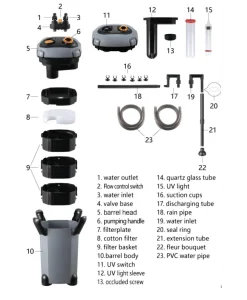
Canister Filters
Canister filters sit outside the tank and use tubes to move water in and out. They offer powerful filtration and large media capacity.
These filters are best for large tanks or heavily stocked aquariums. They provide excellent water quality but need more space and effort to clean.
- Strong mechanical, chemical, and biological filtration
- Customizable filter media options
- Quiet but more complex setup
Sponge Filters
Sponge filters use a sponge to trap debris and host beneficial bacteria. Air bubbles push water through the sponge for filtration.
These filters are gentle and safe for small fish and shrimp. They are low cost and easy to maintain but less powerful for large tanks.
- Provides biological and mechanical filtration
- Does not create strong water currents
- Ideal for breeding or hospital tanks
Internal Filters
Internal filters sit inside the aquarium. They use a motor to pull water through filter pads or cartridges inside the unit.
These filters save space outside the tank. They work well in small tanks but can take up room inside the aquarium.
- Easy to install and operate
- Provides mechanical and biological filtration
- Suitable for small to medium tanks
Credit: www.vevor.com
Choosing The Right Flow Rate
Picking the right flow rate for your aquarium filter is key to keeping your tank healthy. The flow rate affects how clean the water stays and how comfortable your fish and plants feel.
This guide will help you understand what flow rate suits your tank size, fish, plants, and filter capacity.
Tank Size Considerations
Tank size directly affects the flow rate needed. A larger tank requires a stronger flow to circulate water well. Small tanks need gentler flow to avoid stressing fish.
- For tanks under 20 gallons, use a low to medium flow rate.
- Tanks between 20 and 50 gallons need medium flow.
- For tanks over 50 gallons, choose a higher flow rate to cover the volume.
Fish And Plant Needs
Different fish and plants have different flow needs. Some fish prefer calm water, while others enjoy stronger currents. Plants also vary in their tolerance for water movement.
| Type | Flow Preference |
| Delicate fish (e.g., bettas) | Low flow |
| Active fish (e.g., tetras) | Medium flow |
| Strong swimmers (e.g., cichlids) | High flow |
| Delicate plants | Low to medium flow |
| Robust plants | Medium to high flow |
Filter Capacity Ratings
Filter capacity ratings show how much water the filter can clean per hour. Match the filter flow rate to your tank volume and inhabitants.
Here are key points to check on filter labels:
- Gallons per hour (GPH) rating
- Recommended tank size range
- Adjustable flow settings
Choose a filter with a flow rate 4 to 5 times your tank’s volume per hour for most setups.
Adjusting Filter Flow Rate
Adjusting the flow rate of your aquarium filter helps keep water clean and safe. You can change the flow to match your fish and plants’ needs.
Too strong a flow can stress fish, while too weak a flow may reduce filter efficiency. Here are ways to adjust the flow rate properly.
Using Flow Control Valves
Many filters come with flow control valves. These valves let you increase or decrease water flow easily.
- Turn the valve clockwise to slow down the flow.
- Turn it counterclockwise to speed up the flow.
- Adjust the valve slowly and watch fish behavior.
- Set the flow so water moves gently without strong currents.
Modifying Filter Media
Changing the filter media can affect flow rate. Some media block water more than others.
| Filter Media Type | Effect on Flow Rate | Common Use |
| Sponge | Reduces flow moderately | Mechanical filtration |
| Ceramic Rings | Allows good flow | Biological filtration |
| Activated Carbon | May reduce flow slightly | Chemical filtration |
| Foam Pads | Can lower flow | Mechanical filtration |
Removing or adding media can raise or lower the flow. Check the filter flow after changes.
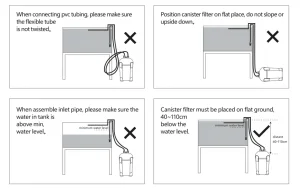
Positioning The Filter Outlet
Where you place the filter outlet affects how water moves in the tank. Position it to spread flow evenly.
- Place the outlet near the water surface for better oxygen exchange.
- Aim the outlet toward the tank wall to reduce strong currents.
- Use spray bars to distribute flow gently over a large area.
- Adjust the outlet height to change water circulation patterns.
Credit: www.vevor.com
Common Flow Rate Mistakes
Choosing the right flow rate for your aquarium filter is important. Mistakes can affect the health of your fish and plants.
Learn about the effects of having a flow rate that is too high or too low. This guide will help you avoid common pitfalls.
Too High Flow Effects
A flow rate that is too high can be harmful to fish. It creates strong currents that stress fish, especially smaller species.
- Fish may struggle to swim, leading to exhaustion.
- Plants can be uprooted or damaged by strong currents.
- Beneficial bacteria may not settle properly in the filter.
Too Low Flow Issues
Low flow rates can also be problematic. They may not provide enough filtration, leading to poor water quality.
| Issue | Effect |
| Insufficient oxygenation | Fish may gasp for air |
| Poor debris removal | Water becomes cloudy |
| Algae growth | Uncontrolled algae blooms |
Measuring Flow Rate Accurately
Accurately measuring the flow rate of your aquarium filter is crucial. It ensures your fish have a healthy environment.
Understanding the flow rate helps maintain clean water. It also supports the well-being of aquatic life.
Tools Needed
Gathering the right tools is important for an accurate measurement. You will need a few simple items.
- A stopwatch or timer
- A container with a known volume
- Calculator for calculations
- Pen and paper for notes
Step-by-step Measurement
Follow these steps to measure the flow rate of your aquarium filter effectively.
- Fill the container with water from the filter outlet.
- Use the stopwatch to time how long it takes to fill the container.
- Record the time taken in seconds.
- Calculate the flow rate using the formula:
Flow Rate = Volume of Container / Time Taken.
Improving Water Clarity Quickly
Clear water is key for a healthy aquarium. It helps fish stay healthy and shows off your tank’s beauty. Improving water clarity can be done fast with the right actions.
This guide shares simple tips to keep your filter flow rate effective. Follow these steps to clear your water quickly and keep it clean longer.
Regular Maintenance Tips
Cleaning your filter and tank regularly stops dirt and waste buildup. This keeps water flowing well and clear. Skipping maintenance can slow your filter’s flow and cloud the water.
- Rinse filter media every 2-4 weeks in tank water, not tap water.
- Remove debris from the tank bottom using a gravel vacuum weekly.
- Check and clean the intake tube to avoid blockages.
- Replace filter cartridges as recommended by the manufacturer.
- Test water quality weekly for ammonia, nitrites, and nitrates.
Supplementary Filtration Methods
Adding extra filtration can speed up water clearing. Use these methods to support your main filter and improve water quality faster.
| Filtration Method | Purpose | How It Helps Water Clarity |
| Activated Carbon | Removes odors and discoloration | Adsorbs impurities and clears water color |
| UV Sterilizer | Kills algae and bacteria | Prevents green water and harmful microbes |
| Protein Skimmer | Removes organic waste | Reduces dissolved organics that cloud water |
| Additional Sponge Filters | Biological filtration | Increases beneficial bacteria to break down waste |
Credit: www.vevor.com
Frequently Asked Questions
What Is The Ideal Flow Rate For Aquarium Filters?
The ideal flow rate is 4 to 6 times the tank volume per hour. This ensures efficient filtration and water circulation. Adjust based on fish species and tank size for optimal water quality and fish health.
How Does Flow Rate Affect Aquarium Fish Health?
Proper flow rate maintains clean water and oxygen levels. Too high flow stresses fish; too low causes waste buildup. Balance flow to suit fish needs and tank environment for healthy aquatic life.
Can A Low Flow Rate Harm My Aquarium?
Yes, low flow rates reduce filtration efficiency. This leads to poor water quality and algae growth. Ensure your filter’s flow rate matches tank size for a clean, healthy aquarium.
How To Calculate Aquarium Filter Flow Rate?
Multiply your tank’s volume by 4 to 6 for the flow rate. For a 20-gallon tank, aim for 80-120 gallons per hour (GPH). This keeps water fresh and fish comfortable.
Conclusion
Choosing the right flow rate keeps your aquarium healthy and clear. Water moves properly, helping fish and plants thrive. Too fast or too slow can cause problems. Check your tank size and filter specs carefully. Adjust flow to meet your aquarium’s needs.
Clean filters work better and last longer. Regular checks make sure everything runs smoothly. Happy fish, clean water, easy care. Simple steps make a big difference. Keep your aquarium fresh and balanced every day.